Grease Trap Pumping in Milwaukee
Vacuum truck service for scheduled pump outs across Milwaukee and the surrounding county, with the disposal site and gallons written on every ticket.
Pumping is the part of this trade people picture: a truck, a hose, and a tank that goes from full to empty. The part that decides whether it was worth paying for happens either side of that. Before, it is the measurement that tells you whether the interval is right. After, it is the paperwork proving where several hundred gallons of regulated waste went.
Scheduled pump outs serve kitchens across Milwaukee, from single trap operations in Walker’s Point to multi compartment interceptors under hotel lots downtown. Route based, so you are not the one remembering when it is due.
How a pump out is priced
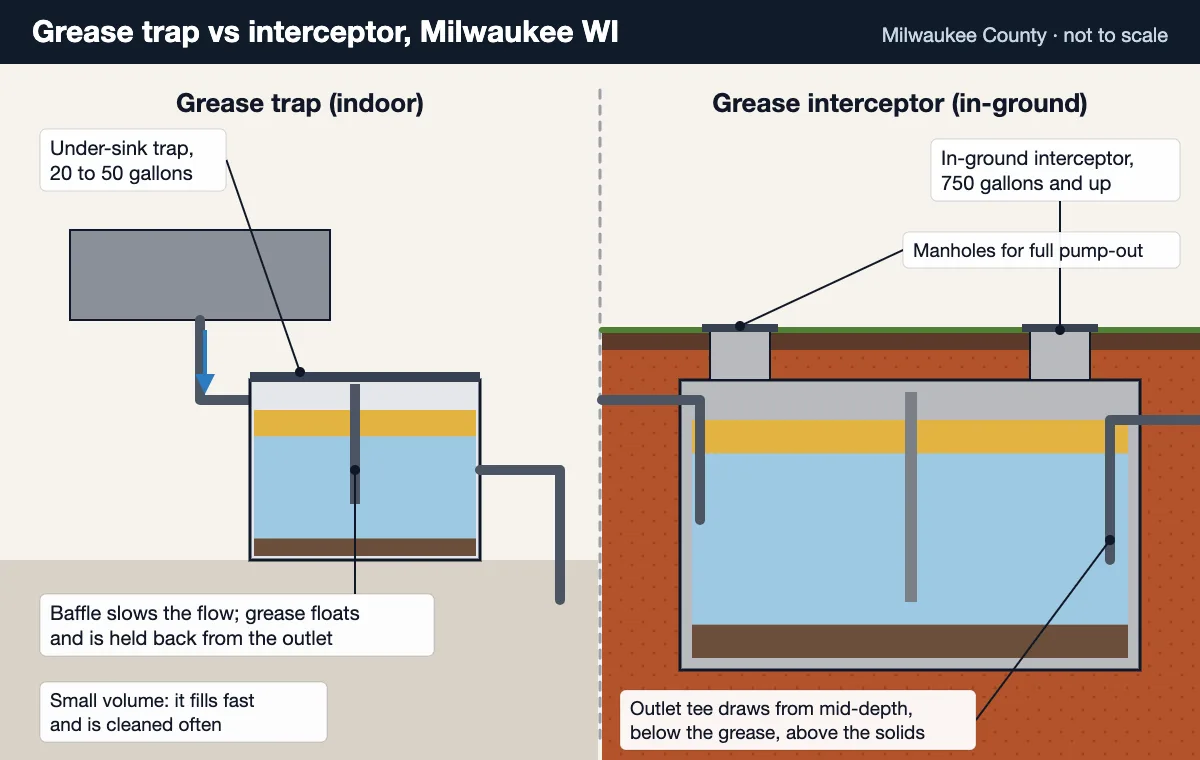
Gallons removed is the dominant variable, and it is dominant for a boring reason: disposal costs money. On a large interceptor service call, disposal and tipping fees alone commonly account for somewhere between 150 and 450 dollars of the invoice. That cost scales with volume no matter who does the work, which is why a 1,500 gallon tank cannot be serviced at under sink prices by anybody, regardless of what the quote says.
- Tank capacity and how full it actually is at service time. A tank pumped at 25 percent costs less to service than the same tank pumped at 70 percent, because less is removed.
- Truck access. A lid in an open lot is a routine stop. A lid behind a locked gate, under a dumpster, or reachable only by running 120 feet of hose is a longer one.
- Whether the service is scheduled or reactive. Route stops are cheaper than emergencies, because an emergency is a truck leaving a planned route.
- Season. Winter jobs take longer on outdoor tanks, and a dug out lid or a solidified cap adds time that has to come from somewhere.
- Condition of the hardware. A collapsed baffle or a lid that has been paved over turns a pump out into a repair conversation.
Licensed hauling, and why you should ask about it
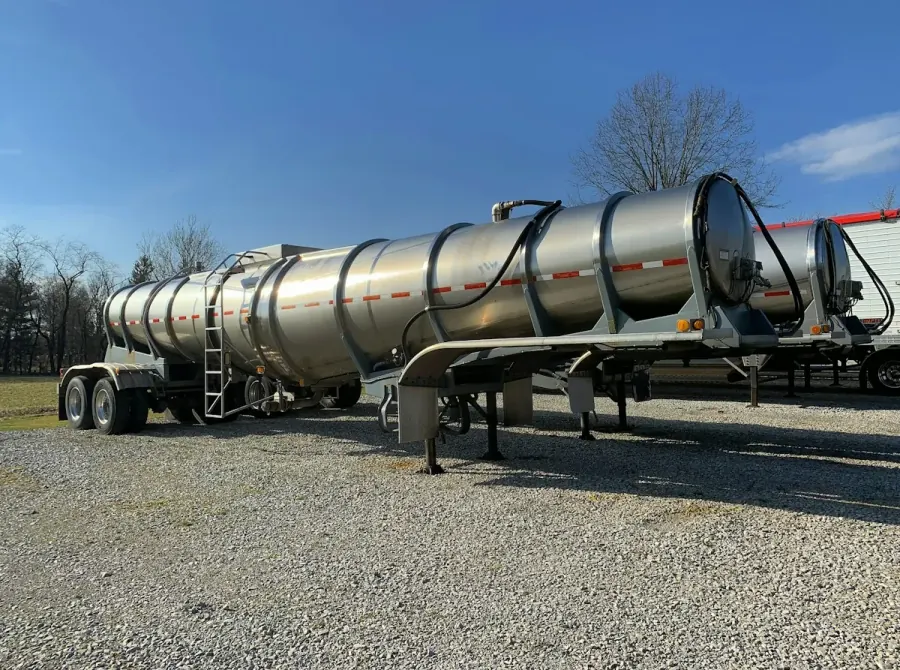
Wisconsin treats grease trap waste as regulated septage. A business hauling it has to hold a Wisconsin DNR septage servicing business license under NR 113, has to register the vehicles used for that purpose and use them for nothing else, has to carry a current copy of the rule in the vehicle, and has to file an annual report with the state by the end of January for the previous calendar year. Disposal has to go to a publicly owned treatment works or a site covered by a WPDES permit.
You can read the state’s own requirements directly at the Wisconsin DNR septage servicing business page. It is worth two minutes of a kitchen manager’s time, because the liability for improperly disposed waste does not stop cleanly at the hauler.
Scheduled routes beat reactive calls
Almost every expensive grease job started as a cheap one that got deferred. A tank that goes past the 25 percent threshold does not simply hold more grease. It stops separating properly, so grease passes through the outlet and into your lateral, where it cools and accumulates on the pipe wall. The pump out that was due in November becomes a pump out plus a jetting bill in February, and the jetting bill is the larger of the two by a wide margin.
Route scheduling removes the decision from the equation. The tank is measured, the interval set from that reading, and the hauler comes back. If your volume changes, the interval changes with it, because a schedule set in 2023 for a kitchen that has since added a fryer is not a schedule any more, it is a countdown.
What a route stop looks like
Short, and mostly invisible from inside the kitchen. The lid needs to be accessible and nothing draining into the tank while it is open. The truck pulls the full contents, the walls and baffles get scraped, the hardware gets checked, and a signed record goes to whoever is on shift. For most kitchens that is under an hour and requires nothing more than knowing the truck is coming.
Interceptor pumping in a dense city
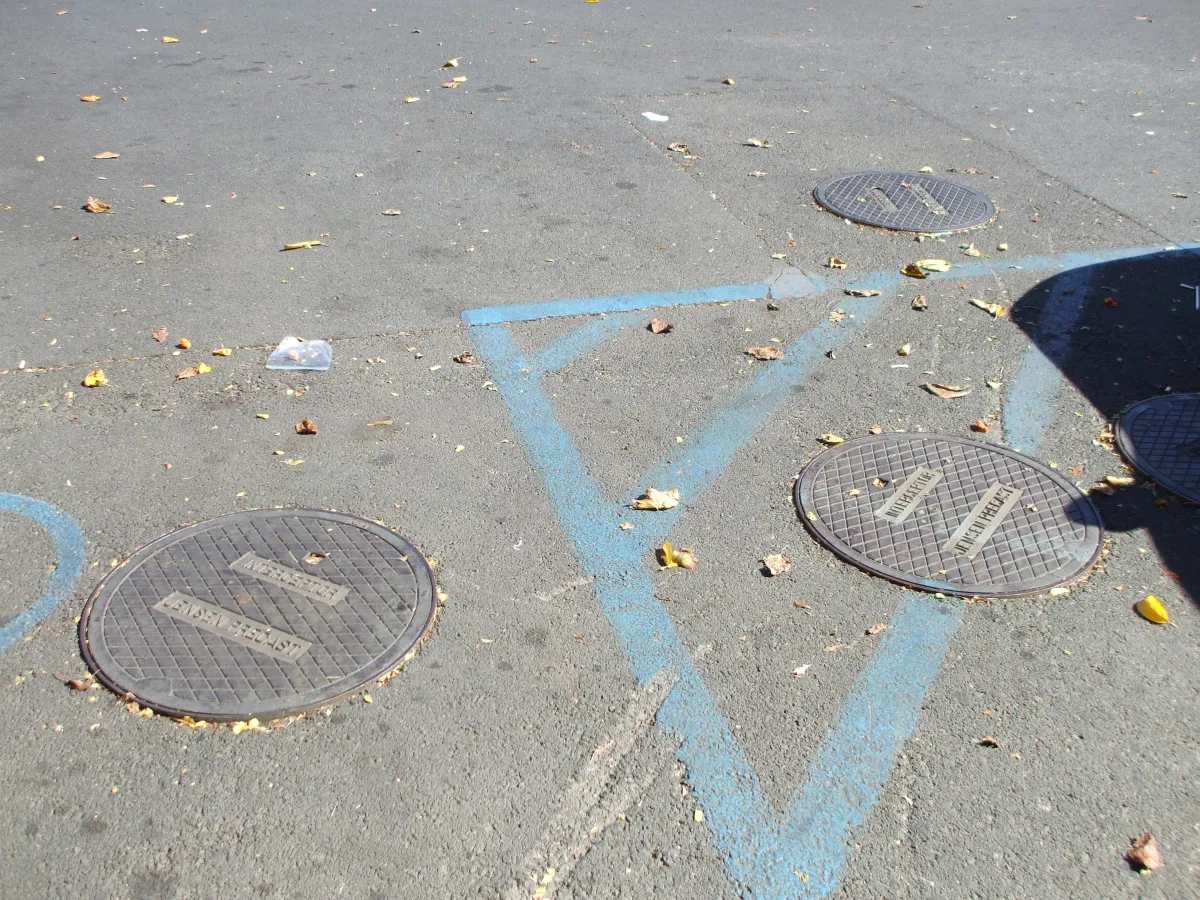
Milwaukee has a lot of kitchens in buildings that predate the idea of a service vehicle needing to reach anything. Tanks under alley pavement in the Third Ward, lids inside fenced compounds, interceptors sitting under the only three parking spaces the business has. None of that stops the job, but it changes the timing. Alley and dock access is generally easier early, before deliveries, which is why a lot of interceptor work happens before most of the city is awake.
Multi compartment interceptors need every chamber emptied, not just the first one. It is common to find tanks where only the inlet chamber has ever been touched, because that is the chamber visible from the lid somebody could get open. The downstream chambers in those tanks are usually the reason the system stopped working.
Getting on the schedule
Send the business name, the neighborhood, tank size if you know it, and when it was last pumped. If the answer to the last one is that nobody knows, that is genuinely fine and extremely common. The first visit sorts it out.
Grease Trap Pumping Questions
What size tank can be pumped?
Anything from a 20 gallon under sink unit to a 3,000 gallon in ground interceptor. The limiting factor is almost never tank size, it is truck access. A tank under a loading dock with a dumpster parked over the lid is a harder job than a 2,000 gallon tank in an open lot.
Should the gallons removed be recorded?
Yes, on every ticket. Gallons removed is the number that ties your service record to the tank size, and it is the first thing an inspector uses to sanity check whether a claimed service was a real pump out or a skim.
Where does Wisconsin allow the waste to be taken?
To a publicly owned treatment works or to a site operating under a WPDES permit. Haulers must hold a Wisconsin DNR septage servicing business license, run vehicles registered for that purpose and no other, and file an annual report with the state each January.
Can pumping run on a set route so I do not have to remember?
That is the point of a maintenance program. The interval is set from your first measurement, you go on a route, and the hauler comes back without you having to call. You still get a record every visit, and if your volume changes the tank should be re-measured rather than holding an interval that stopped fitting.
Can the tank be pumped if my lot is snowed in?
Usually, but the lid needs to be findable. Mark it before the first plow of the season. Digging a lid out of two feet of packed plow snow while a truck idles is the slowest and most expensive way to buy a pump out.
Keep Reading
What a full service includes, local pricing, and how to book a first visit.
Large in ground tanks, multi compartment interceptors and winter lot access.
What the district requires, what inspectors ask for, and the three year rule.
Local ranges by tank size and the reason gallons pumped drives the number.
Put Your Tank on a Route
Scheduled pump outs cost less than reactive ones and never arrive at the worst possible moment. Send the details to get the right interval worked out.
Request Service