Cold Weather Grease Trap Care in Milwaukee
Five months of the year, everything the national advice tells you about grease trap intervals is wrong for this city. Here is what actually changes when the temperature drops, and what to do about it.
Search for grease trap advice and you will find a great deal of content written as though every commercial kitchen in the country operates in the same climate. It does not matter much in Florida. It matters a lot here. A Milwaukee kitchen running one interval all year is running a schedule that is roughly correct for seven months and optimistic for five.
This page exists because no competitor covering this city covers this, and it is the single most Milwaukee specific thing there is to say about grease traps.
What cold actually does inside the tank
Separation gets worse
A grease trap works on temperature and time. Warm effluent enters, slows down, cools, and the fats float while the solids sink. That process depends on the grease being liquid long enough to rise. When ambient temperature drops, incoming water cools faster and fats begin solidifying before they have fully separated, so a proportion of them stay suspended and leave through the outlet.
The result is counterintuitive. A cold tank can look less full and still be performing worse, because some of what should have been captured has gone down the line instead.
The cap hardens and thickens
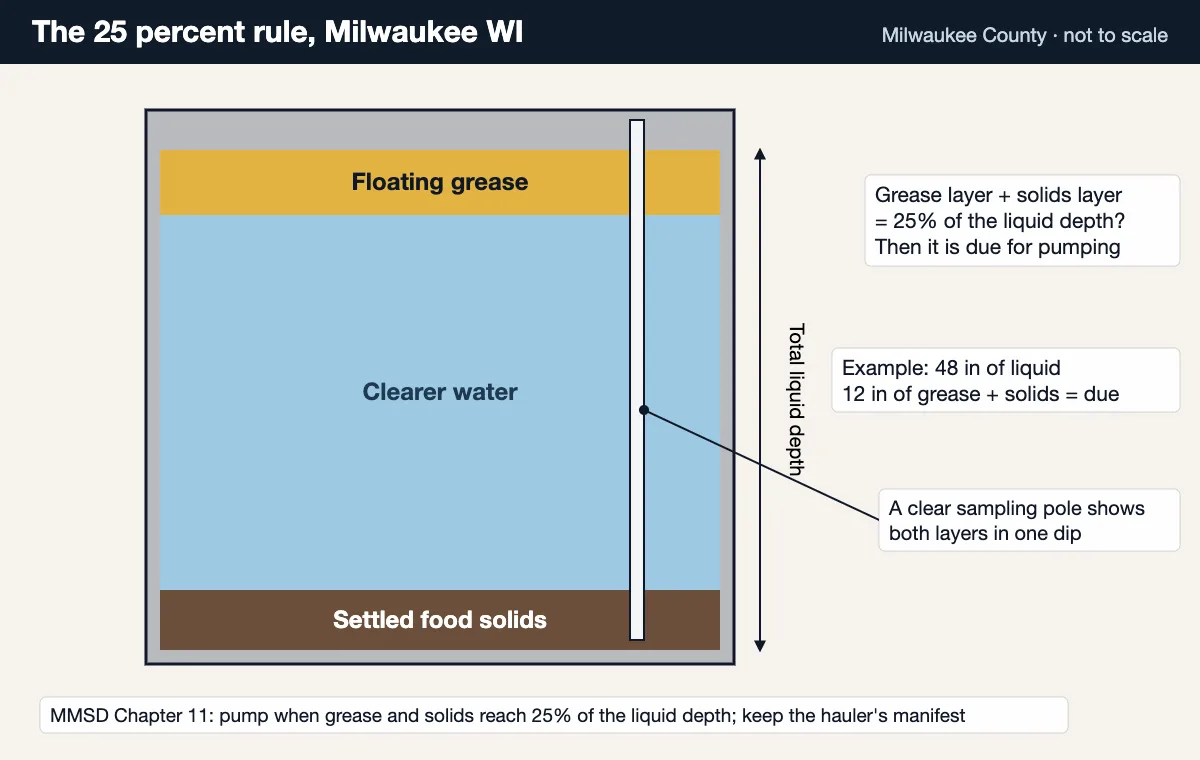
Grease that would be soft and pumpable in July sets up into a dense mat in January. That mat occupies more of the tank’s vertical depth per pound of grease, which means you hit the 25 percent threshold on less accumulated material than you would in summer. The tank has not changed. The physics have.
Some of it ends up in your lateral
This is the expensive part. Grease that passes through the outlet in cold weather does not travel far before it cools against the pipe wall and deposits. Every winter, a proportion of Milwaukee restaurant sewer blockages are the cumulative result of a trap that was underperforming for three months while appearing to be fine.
The 40 degree provision
This is a real siting requirement in the state plumbing code, and it is worth understanding what it implies. It means the code recognises that a cold interceptor is a malfunctioning interceptor. It also means a tank installed in an unheated outbuilding, an unheated back corridor, or a shed that spends December below freezing is not merely performing badly, it is sited somewhere the code says it should not be.
In practice, in built Milwaukee, that situation is not rare. Kitchens get retrofitted into buildings that were never designed for them, and the trap goes wherever there is room. If yours lives somewhere cold, the first honest conversation is about whether the interval can compensate or whether the tank is in the wrong place.
Access, which is the other half of the problem
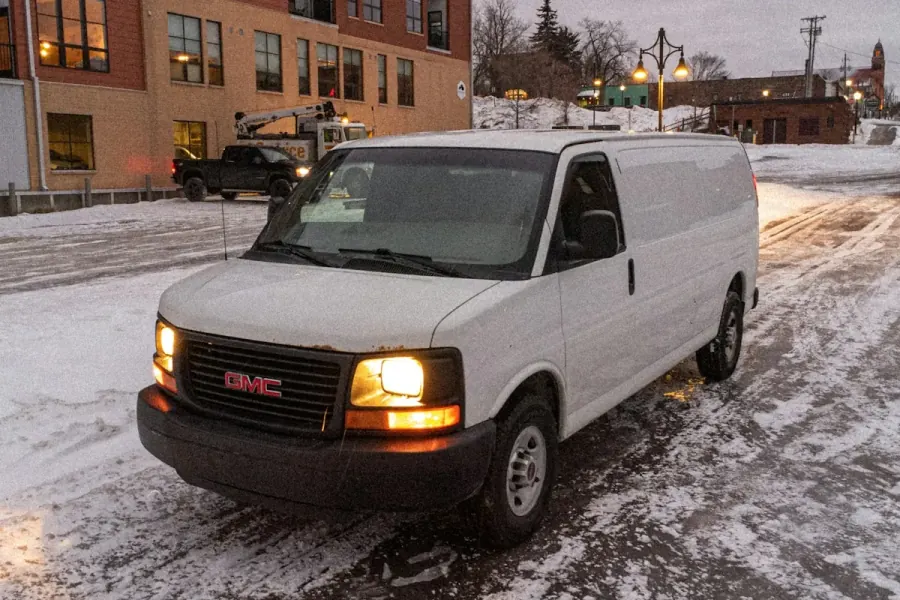
- Mark the lid before the first plow. This is the highest value ten minutes of winter preparation available to any operator with an outdoor interceptor.
- Tell whoever plows your lot where the tank is. Plow piles land where it is convenient, and the convenient spot is frequently on top of the lid.
- Keep a path to the lid clear enough that a hose run does not cross a sheet of ice.
- Expect winter service calls to take longer. The work is the same, the getting to it is not.
- If the lid has frozen into its frame, say so when you book. That is a different arrival than a routine stop.
The winter schedule that actually works
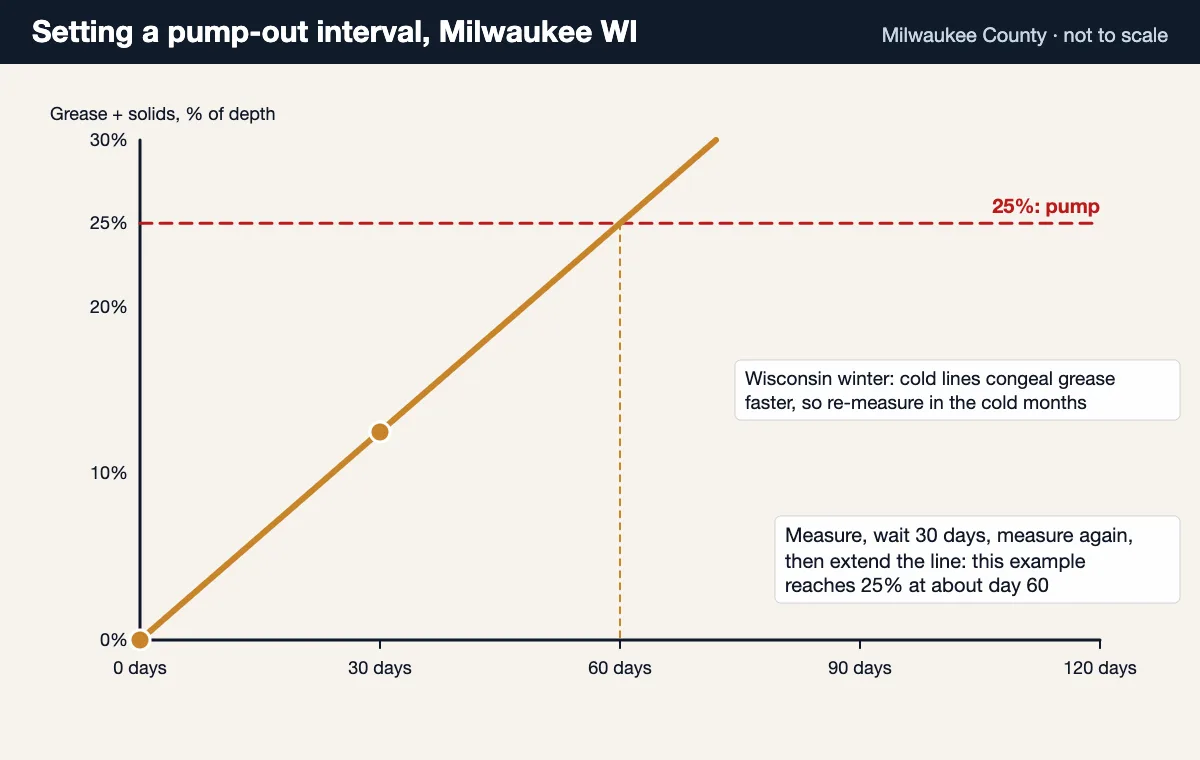
The general shape is simple: shorten the interval through the cold months and get a service in before the season starts.
Service before the ground hardens
A late autumn pump out means you enter winter with an empty tank and the maximum possible buffer. It also means the last time anybody opened that lid was under reasonable conditions, so if there is a hardware problem you find out in November rather than during a January backup.
Shorten the cold months, not the whole year
A kitchen on a 90 day summer interval is often better served by something closer to 60 through the coldest stretch, then returning to the summer interval in spring. That is a seasonal schedule rather than a blanket reduction, so you are not paying winter frequency in July.
Watch the kitchen practices harder in winter
Every habit that loads the trap costs more in cold weather because the system has less margin. Hot water flushing a slow drain is the worst of them year round and the worst by a wider margin in January, because it carries grease further down a colder pipe.
Closures and idle tanks
Seasonal businesses, holiday closures and institutional winter breaks create a specific risk: a tank that stops receiving warm flow for a week or more, in the coldest part of the year, in an outdoor location. That is the scenario where genuine freezing becomes possible rather than theoretical, and it is worth having the tank serviced before an extended closure rather than after.
The short version
- Get a service in before winter starts so you enter the season empty.
- Shorten the interval through the cold months rather than holding the summer schedule.
- Mark the lid and tell the plow driver.
- If the tank lives somewhere that drops below 40 degrees, treat that as a siting problem rather than a scheduling one.
- Assume winter service calls take longer and book accordingly.
Winter Grease Trap Questions
Does cold weather really change how often a grease trap needs pumping?
Yes, and it is one of the least discussed things in this trade. Grease separates less efficiently at low temperatures and forms a denser, harder cap. An outdoor tank in a Milwaukee January holds less usable volume than the same tank in July, so the interval that worked through summer frequently does not hold through winter.
What is the 40 degree rule?
Wisconsin's plumbing code states that no grease interceptor may be located where the surrounding temperatures, under operating conditions, are less than 40 degrees Fahrenheit. It is a siting requirement, which means a tank in an unheated space that routinely drops below that line is a compliance question and not only an operational one.
Can a grease trap freeze solid?
The grease cap can set up hard enough that it behaves like a solid, particularly on shallow outdoor tanks and on any tank running well below normal operating temperature. Fully frozen liquid is less common because incoming warm water keeps the column moving, but a tank that stops receiving flow during a closure is a different matter.
What should I do before the first snow?
Mark the interceptor lid. A stake, a bollard marker, anything a plow driver can see and a technician can find. This is the single highest value thing a Milwaukee operator can do for winter grease service, and it takes ten minutes in October.
Should I get a service done before winter starts?
If the timing is anywhere close, yes. Going into the cold season with an empty tank buys you the maximum possible buffer at the point in the year when both accumulation and access are at their worst.
Keep Reading
What a full service includes, local pricing, and how to book a first visit.
The 25 percent rule, state sizing code and measuring your own tank.
In ground tanks, every chamber, and winter lot access in practice.
What to do when a cold snap turns a marginal tank into a backup.
Get Ahead of the Cold Season
A late autumn service is the cheapest insurance available on an outdoor interceptor in this city. Tell us about the tank and get it booked before the ground hardens.
Request Service