
Grease Trap Cleaning in Milwaukee, WI
Grease trap cleaning in Milwaukee typically costs about 303 to 436 dollars per service, and most kitchens need it every 60 to 90 days to stay under the MMSD 25 percent rule.
Full pump outs for commercial kitchens across the city and Milwaukee County. Every tank measured before it is pumped, every baffle scraped, and a signed service record left on site so your MMSD file is never the thing that trips you up.
- Traps and interceptors, 20 to 3,000 gallons
- Ask for the hauler's DNR license
- Winter service planning
- Records you keep for three years
Most grease trap problems in this city are scheduling problems
Almost nobody calls a grease hauler because they want to. They call because the dish pit is draining slow, because a health inspector asked a question they could not answer, or because something came up through a floor drain at seven on a Friday night. By that point the fix is expensive and disruptive, and it was almost always avoidable.
The underlying cause is nearly always the same. Somebody set a grease trap service interval once, years ago, based on nothing in particular, and the kitchen changed around it. Menus got heavier. Covers went up. A second fryer went in. The trap stayed on the schedule it had when the place was half as busy, and it quietly stopped keeping up.
The better way works the other way around. The first visit to a Milwaukee kitchen starts with a measurement of what is actually in the tank, and the interval comes out of that reading. Some kitchens find out they have been paying for service they did not need. Others find out they are sitting at 40 percent capacity and have been one busy weekend away from a backup. Either way it stops being guesswork, which is the whole point.
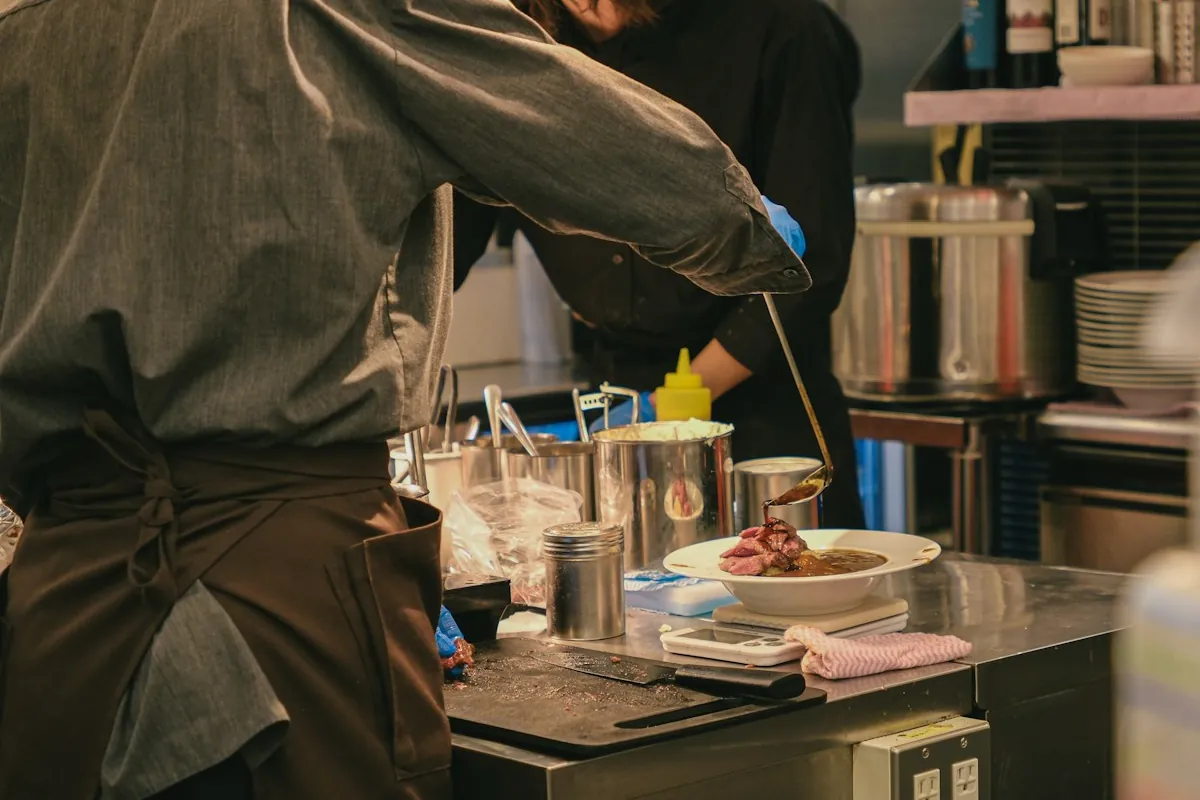
A working line puts fats, oils and grease down the drain every single service. The trap is the only thing standing between that and your lateral.
Grease services in Milwaukee
One trade, done properly, not a plumbing add-on squeezed in when the schedule allows.
Vacuum truck service for scheduled pump outs, with gallons and the disposal site recorded on every ticket.
Details ›Large in ground tanks from 750 gallons up. Lot access, frozen lids and multi compartment interceptors handled.
Details ›Backed up trap, overflowing floor drain or a failed inspection. Jobs that cannot wait for the next route day.
Details ›Standing maintenance programs for restaurants, brewpubs, cafeterias, hotels and institutional kitchens.
Details ›What a full pump out actually includes
Worth knowing, because the cheapest quote in this city is almost always a skim, and a skim is not a service. The tell is the interval: if a tank needs doing again three weeks after a hauler has been, you did not buy a cleaning, you bought a delay. Here is every step, in order.
Measure before pumping
The first visit should start with a dipstick reading, not a hose. Liquid depth, grease cap thickness and settled solids depth tell you where you actually sit against the 25 percent threshold. That reading sets your interval.
Full pump out, not a skim
Everything comes out: the floating grease cap, the liquid column and the solids on the floor of the tank. A skim looks identical the day it is done and fails within three weeks, because the solids layer is what destroys separation efficiency.
Walls and baffles scraped
Grease bonds to the tank walls and to the inlet and outlet baffles. If the baffles are coated, the tank cannot hold back a surge from a dish pit. They should be scraped down and checked intact, because a broken baffle sends grease straight out the outlet and no amount of pumping fixes that.
Inspection of the hardware
Lid and seal condition, inlet and outlet condition, the sample port if there is one, and any sign of the tank taking on groundwater. You should be told what was found even when there is nothing to sell you off the back of it.
Paperwork left on site
A signed service record with the date, gallons removed, the readings taken and the disposal destination. Keep one copy in your binder for three years, and ask the hauler to keep a backup copy too.
Traps and interceptors covered
Same approach regardless of size: measure first, pump everything, scrape the hardware, write it down. What changes is the equipment, the access and the time on site.
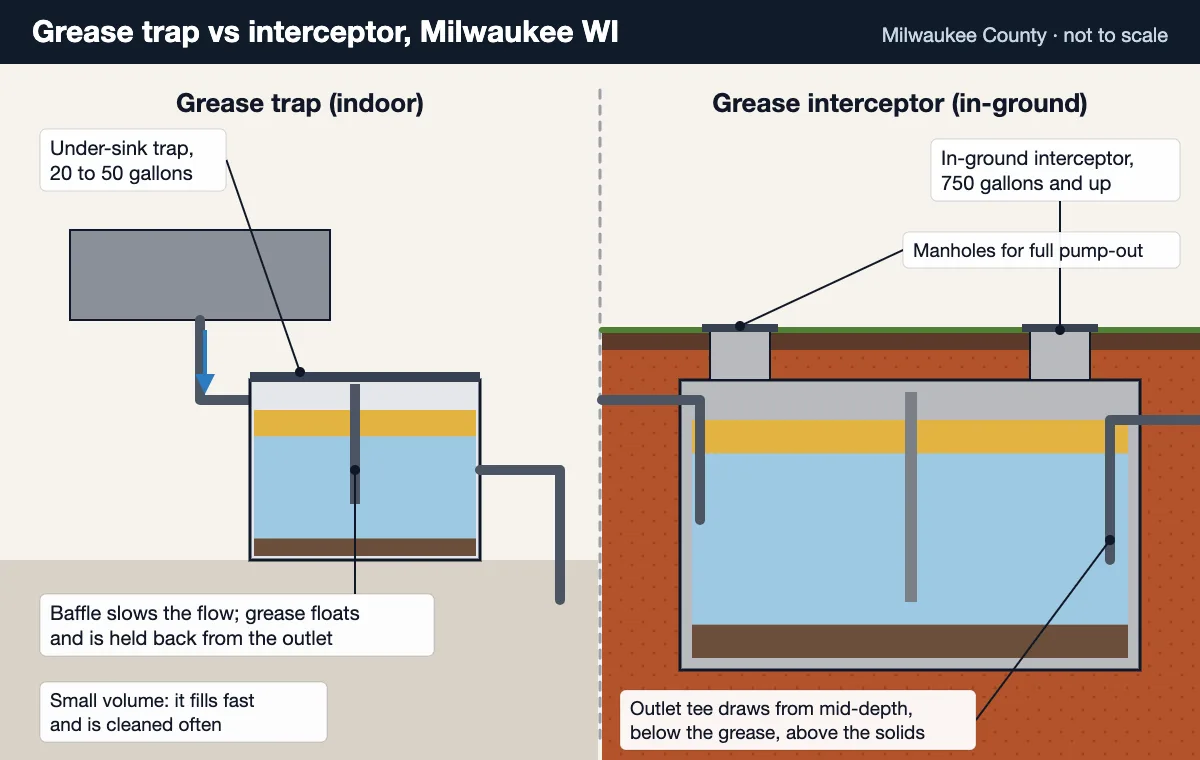
Under sink and indoor units
Typically 20 to 50 gallons, under the three compartment sink or set into the floor nearby, and usually 20 to 40 minutes to service. Wisconsin's plumbing code requires interior interceptors to be rated at a minimum of 15 gallons per minute, with grease holding capacity in pounds at least double the maximum rated flow. Undersized indoor units are common in older Milwaukee buildings where the kitchen grew and the trap did not, and the symptom is a tank that needs service far more often than it should.
In ground interceptors
The large concrete tanks outside, accessed through a lid in the lot, usually 750 gallons and up. They need a vacuum truck and reasonable vehicle access, which in a dense neighborhood like the Historic Third Ward can mean scheduling around deliveries or street parking rather than around your kitchen. A 1,000 gallon tank is usually an hour to 90 minutes, and multi compartment interceptors take longer because every chamber has to be emptied and checked, not just the first one.
Older and problem tanks
Milwaukee has a lot of building stock older than the plumbing code that governs it. Collapsed baffles, tanks that have taken on groundwater, lids that have been paved over, and interceptors nobody in the building has opened in a decade are all common. None of those are reasons to refuse a job. They are reasons to inspect rather than pump blind, and you should be told what was found before anything gets recommended.
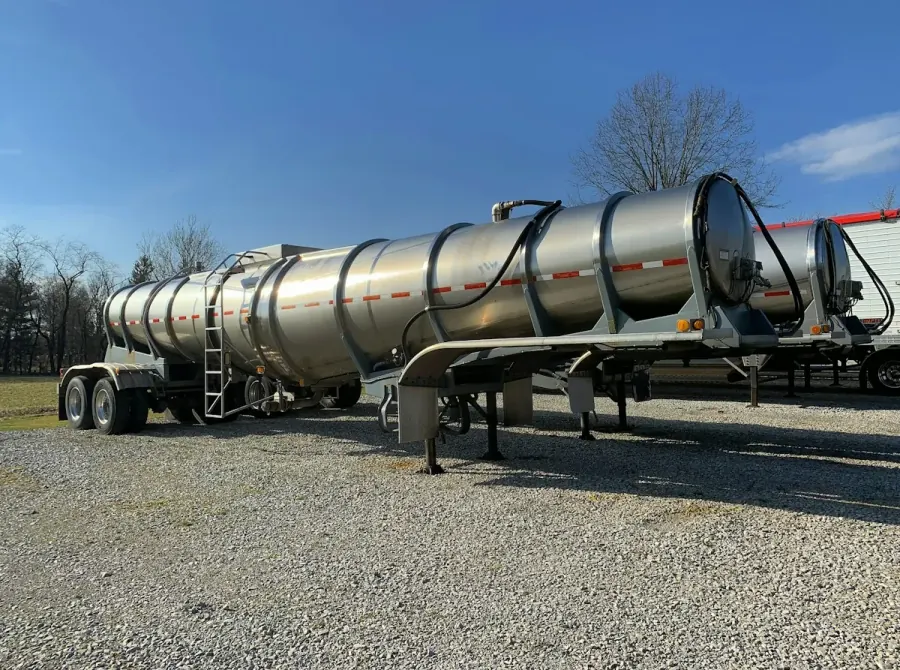
Wisconsin requires grease haulers to hold a DNR septage servicing business license and to run vehicles registered for that purpose and no other.
MMSD, the 25 percent rule, and the paperwork
If your kitchen is in Milwaukee or one of the surrounding communities in the district service area, your fats, oils and grease discharge is regulated by the Milwaukee Metropolitan Sewerage District under its Chapter 11 discharge regulations. Inspections are unannounced, which in practice means the state of your tank on an ordinary Wednesday is what gets judged.
The operative threshold is the 25 percent rule. When accumulated grease and settled solids together reach 25 percent of the tank’s total liquid depth, the tank has to be pumped. Note what that does not say. It does not name an interval. A calendar schedule is a way of staying under the threshold, not a substitute for it.
The second half is records. Waste has to leave on a licensed hauler, and the service records have to be kept for three years by the food service establishment. That last part catches people out constantly. The hauler is not the record keeper of last resort. If your binder is missing two years because a general manager left and took a filing system with him, the gap is still yours.
The part no national grease company will tell you about Milwaukee
Grease behaves differently at 18 degrees than it does at 70. Nearly all of the generic advice about pumping intervals was written for a climate that does not have five months of this. In a Milwaukee January the cap on an outdoor interceptor sets up harder, separates worse and pumps slower, and a tank that comfortably made 90 days in August will not make it in February.
There is a code hook for this too. Wisconsin’s plumbing code is explicit that no grease interceptor may be located where the surrounding temperatures, under operating conditions, are less than 40 degrees Fahrenheit. That makes a cold running tank a compliance question, not only an operational annoyance. Plenty of interceptors in this city sit in unheated back corners and outbuildings that spend most of December well under that line.
Practical consequences: shorten the interval through winter rather than holding the summer schedule, keep the lid findable after a plow has been through, and get a fall service in before the ground hardens. Plan for this rather than discovering it in January.

Snow on the lot does not cancel a service call. It changes how long the call takes.
Kitchens served across the city
From the Historic Third Ward and Walker’s Point out to Wauwatosa and West Allis.
Full service restaurants
Fryers, flat tops and a three compartment sink put the heaviest sustained load on a trap. These are the kitchens most often running a longer interval than their volume justifies.
Brewpubs and taprooms
Kitchen output swings hard with the taproom calendar. A quiet Tuesday and a packed event weekend load the tank very differently, which makes a fixed calendar interval a poor fit.
Cafes and bakeries
Lower fat volume but constant dairy and dough solids. Traps here fill from the bottom up with settled solids rather than from the top down with a grease cap.
Hotels and banquet kitchens
Long idle stretches punctuated by very high volume events. Usually an in ground interceptor, usually under a parking area, usually needing winter access planned in advance.
Institutional kitchens
Schools, care facilities and cafeterias run on a fixed calendar with real consequences for downtime, so service gets scheduled around closures rather than squeezed into a service window.
Food halls and shared kitchens
Several operators discharging into one tank and nobody feeling like the owner of it. These need a named responsible party for records more than they need anything technical.
Roughly what this costs in Milwaukee
Real local ranges, not a national average. Gallons pumped is the single biggest driver, because disposal and tipping fees alone account for something like 150 to 450 dollars of a large interceptor call.
Where we cover
Grease Trap Questions From Milwaukee Kitchens
How often does a Milwaukee restaurant need its grease trap pumped?
The rule that actually governs you is the 25 percent rule: once accumulated grease and settled solids reach 25 percent of the tank's total liquid depth, it has to be pumped. For most Milwaukee kitchens that lands somewhere between 60 and 90 days. A high volume fryer house in the Third Ward can hit it in five weeks. A coffee shop with one three compartment sink might go six months. The interval is a result, not a rule, so the honest answer is that your tank should be measured on the first visit and the schedule set from what is found.
What does grease trap cleaning cost in Milwaukee?
Reported Milwaukee averages run roughly 303 to 436 dollars per service, with the full observed range spanning about 103 to 747 dollars. A small under sink unit in the 20 to 50 gallon range typically falls between 150 and 500 dollars. A 1,000 to 1,500 gallon outdoor in ground interceptor runs from around 300 to well past 1,500 dollars. Disposal and tipping fees alone account for roughly 150 to 450 dollars of a large interceptor service call, which is why gallons pumped drives the number more than anything else.
Is a grease trap the same thing as a grease interceptor?
Functionally yes, practically no. A trap is the smaller indoor unit, usually under a sink or set into the floor, typically rated in gallons per minute. An interceptor is the large in ground tank outside, usually 750 gallons and up, accessed through a lid in the parking lot. Wisconsin's plumbing code treats them separately for sizing and siting, and the pumping job is completely different. An interceptor needs a vacuum truck. A small trap can often be serviced by hand.
Does MMSD actually inspect grease traps?
Yes, and the inspections are unannounced. The Milwaukee Metropolitan Sewerage District regulates fats, oils and grease discharge from food service establishments across its service area under its Chapter 11 discharge regulations. Inspectors look at tank condition, whether the 25 percent threshold has been crossed, and your service records. The records are the part most kitchens get wrong.
How long do I have to keep my grease trap service records?
Three years. And the responsibility sits with the food service establishment, not with the hauler. If a hauler pumped your tank and you lost the paperwork, the violation is still yours. Insist on a signed record after every service, and ask whether the hauler keeps a copy that can be reissued if a folder walks off during a manager change.
Can an outdoor interceptor be pumped in a Milwaukee winter?
Yes, outdoor interceptors can be pumped all season. Frozen grease caps, snow covered lids and salted, plowed lots all slow the job down but none of them stop it. The real winter problem is different: Wisconsin plumbing code states that no grease interceptor may be located where surrounding temperatures under operating conditions fall below 40 degrees Fahrenheit. A tank running cold is a tank that solidifies faster, and that is a compliance question, not just an inconvenience.
Tell us about your tank
Four fields. No phone tree, no discovery call, no sequence of emails trying to book a meeting. Send the business name, the neighborhood and whatever you know about the trap, and you get a real number back.
If you do not know your trap size, say so. Plenty of kitchens have no idea, and finding out is part of the first visit rather than a prerequisite for getting a quote.
Get a Straight Quote on Your Tank
Tell us the business, the neighborhood and roughly when it was last pumped. You get a real number and a real interval back, not a call back to book a call back.
Request Service