Commercial Kitchen Grease Trap Service
Standing maintenance programs for Milwaukee restaurants, brewpubs, hotels, cafeterias and institutional kitchens. Interval set from measurement, records on every visit, nothing for you to remember.
The single best predictor of whether a kitchen will have a grease problem is not its volume, its menu, or the age of its building. It is whether anyone owns the schedule. Every kitchen that has never had a backup has one thing in common: somebody, at some point, decided that the trap was on a calendar and then stopped thinking about it.
That is the whole product here: measure the tank, set the interval from what is actually in it, return on that interval, and hand over a record each time. What you stop doing is remembering.
How the interval gets set
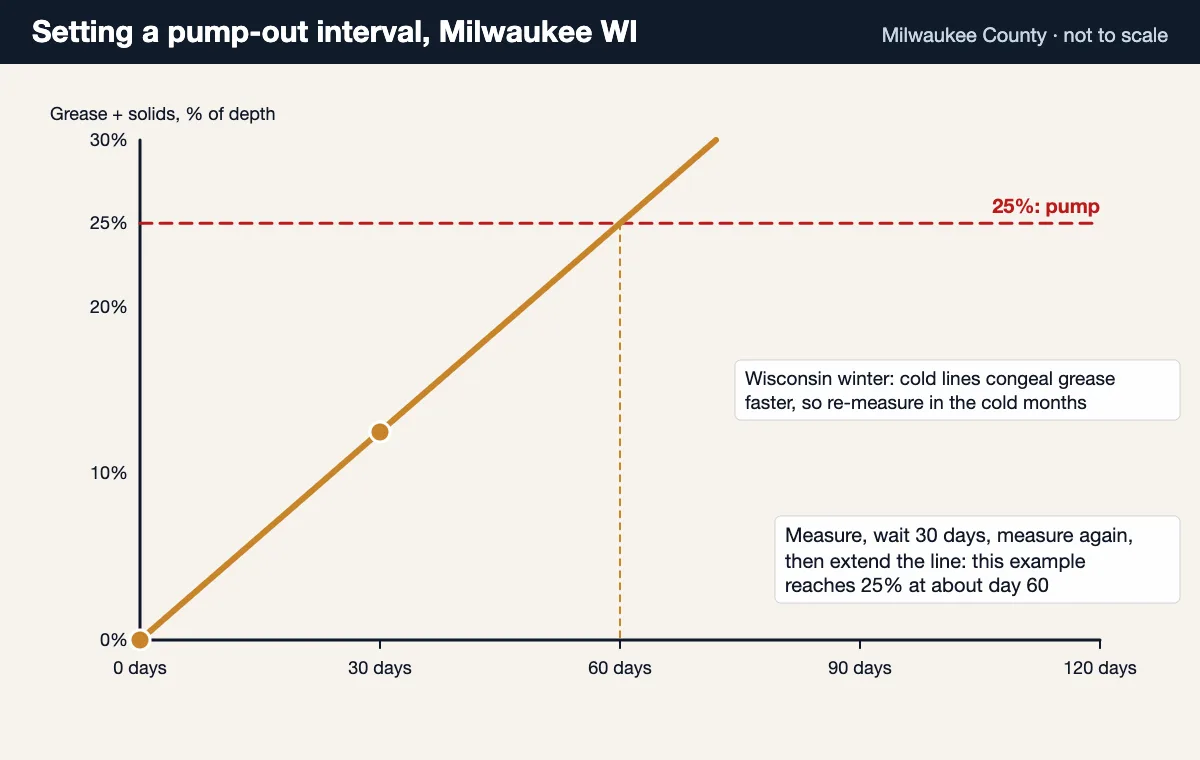
Not by category and not by guess. The governing rule for Milwaukee kitchens inside the district service area is the 25 percent rule, which says the tank has to be pumped once accumulated grease and settled solids reach 25 percent of the tank’s total liquid depth. Every schedule is simply an attempt to stay below that number with margin.
So the first visit is a measurement. Liquid depth, grease cap thickness and settled solids depth show how much of the threshold you have consumed and over what period. From that a hauler can project a real interval instead of assigning you the 90 day default that gets handed to everyone. For most Milwaukee kitchens the answer lands between 60 and 90 days, but the outliers in both directions are more common than the average suggests.
Kitchen types and what actually differs

Full service restaurants
The heaviest sustained load, and the most consistent. Fryers, flat tops and a three compartment sink running every service put a predictable volume of fats, oils and grease into the tank, which is good news: predictable load means an interval that holds. These are the kitchens where a measured schedule pays for itself fastest.
Brewpubs and taprooms
Milwaukee has a lot of these and they behave differently from restaurants. Kitchen output tracks the taproom calendar, not the day of the week. A quiet Tuesday and a packed event Saturday load the tank very differently, so a fixed interval either wastes money in the quiet stretch or runs short through the busy one. Seasonal intervals fit these better.
Cafes, bakeries and coffee operations
Lower fat volume, but constant dairy and dough solids. Traps here fill from the bottom up with settled solids rather than from the top down with a grease cap, which means a skim service is worse than useless. The layer that fills these tanks is exactly the layer a skim leaves behind.
Hotels and banquet kitchens
Long idle periods punctuated by very high volume events. Almost always an in ground interceptor, almost always under a parking area, and almost always needing access planned around guests and deliveries. Winter access planning matters most here, because these are the tanks that spend three months under plow snow.
Institutional kitchens
Schools, care facilities and large cafeterias run fixed calendars with real consequences for downtime. The advantage is that closures are known months ahead, so service can be scheduled into them rather than squeezed around a lunch service.
Food halls and shared kitchens
Technically the simplest tank and practically the hardest account, because several operators discharge into one interceptor and nobody feels like its owner. The technical service is routine. The thing that needs solving is which entity is the record keeper, because MMSD holds the food service establishment responsible for three years of records and a shared space with no named party has three years of nobody.
What a program includes
- Initial measurement and an interval derived from it, not from a default.
- Scheduled full pump outs: grease cap, liquid column and settled solids, every chamber on multi compartment tanks.
- Baffle and hardware inspection at every visit, with problems flagged before they become backups.
- A signed service record left on site each time, listing date, gallons removed, readings and the licensed disposal destination.
- Ask the hauler to keep a backup copy of your records alongside the three years you are required to hold.
- Interval review when your volume changes, in either direction.
Training the people who actually control the load
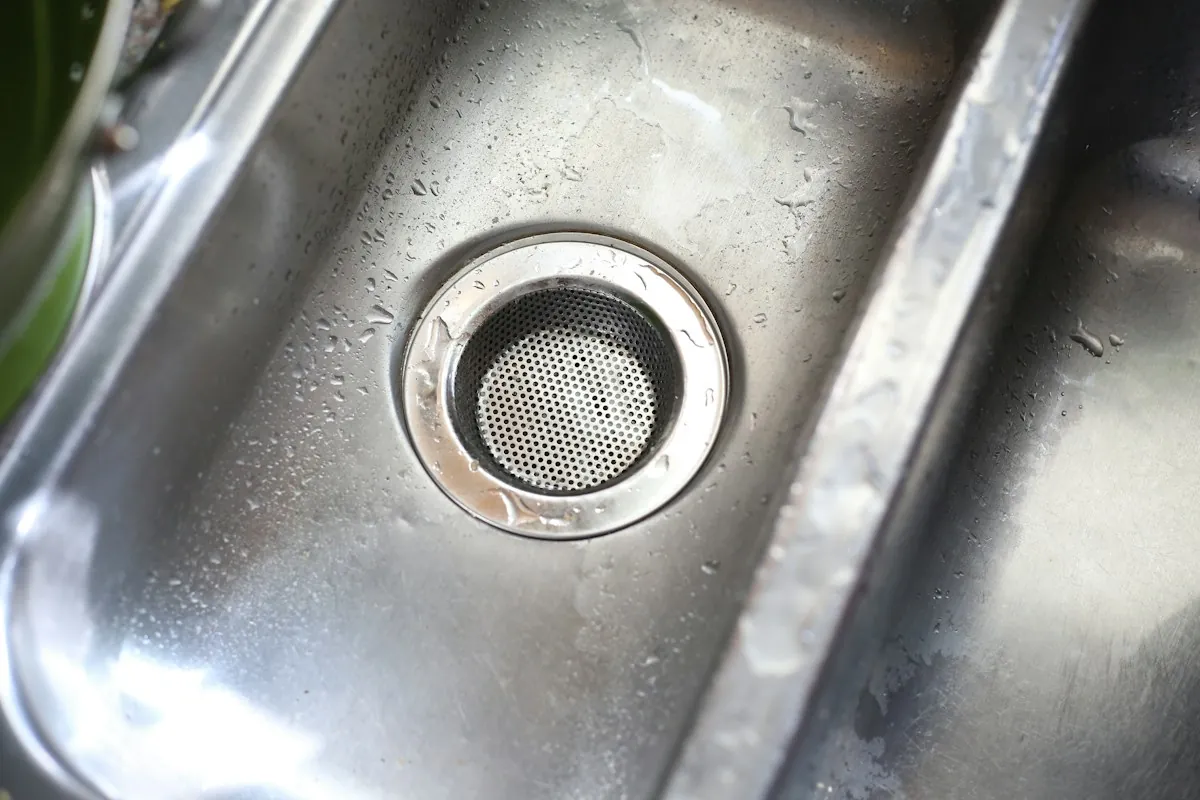
The trap is downstream of every decision made at the dish pit. Scraping plates properly, keeping fryer oil out of the drain entirely, using a fine mesh strainer at every sink and not treating a floor drain as a disposal route all extend an interval measurably. None of it is complicated and all of it evaporates through staff turnover, which is why it is worth repeating rather than saying once.
The most expensive habit in Milwaukee kitchens is hot water. Running hot water to clear a slow drain moves the grease further down the line, where it cools and deposits in your lateral instead of your tank. The tank is designed to hold grease. The lateral is not, and clearing the lateral costs several times what a pump out does.
Maintenance Program Questions
What is a maintenance program and how is it different from calling when needed?
A program means the tank is measured, an interval is set from the measurement, and the hauler returns on that interval without you initiating it. You get a record every visit and the tank is re-measured periodically so the interval tracks your actual volume rather than a number somebody picked once.
We are a brewpub with very uneven volume. Does a fixed interval work?
Not well, which is why intervals should come from tank readings rather than from a category. Venues with event driven volume often do better on a seasonal interval, shorter through the busy months and through winter, longer in the quiet stretch.
Who is responsible for the records in a shared or food hall kitchen?
The food service establishment, which in a shared setup is ambiguous unless someone names it. That ambiguity is a common records failure in multi operator spaces. Pick a responsible party before an inspector picks one for you.
Can service be scheduled around our closure days?
Yes, and for institutional kitchens that is usually the best approach. Schools, care facilities and cafeterias with fixed calendars are far easier to service during a closure than during a lunch window, and it costs the kitchen nothing in downtime.
Should the hauler tell us if we are being serviced too often?
Yes. It happens more than you would think, usually where an interval was set for a busier era and never revisited. A tank consistently arriving at 8 or 10 percent does not need the interval it is on, and an honest hauler will say so rather than defend a number that does not fit.
Keep Reading
What a full service includes, local pricing, and how to book a first visit.
The 25 percent rule, Wisconsin sizing code, and measuring a tank yourself.
Chapter 11, unannounced inspections and the three year record requirement.
Why a summer interval frequently does not survive a Milwaukee February.
Hand the Schedule to Someone Else
Tell us about the kitchen to get the tank measured, a real interval set and records on every visit. You go back to running a restaurant.
Request Service